
Key Takeaways
- Boosts productivity by creating safer jobsites where crews can work more confidently and efficiently
- Improves communication and emergency response with mobile safety apps that track workers and send real-time alerts
- Enhances hazard detection through jobsite sensors that monitor environmental conditions and send notifications
Whether you build homes from the ground up or remodel existing ones, the safety of your team is your top priority. And with 92% of workers saying a safer workplace made them more productive, it’s clear that it’s important to your team too. Fortunately, there are contractor safety apps, smart jobsite technology and advanced construction personal protective equipment available to make it easier to manage a safe jobsite.
1. Top Construction Safety Apps for Contractors
Construction safety apps help contractors monitor worker activity, improve communication and respond quickly to emergencies.
Mobile construction safety apps like StaySafe and the NIOSH Ladder Safety App help contractors create integrated safety platforms. These tools track worker location, prompt regular check-ins and provide emergency alerts.
StaySafe App: For when your team members find themselves working on their own.
- The StaySafe app tracks each team member’s GPS location in real time, ensuring supervisors know their whereabouts.
- It prompts employees to regularly check in with their project manager, supporting ongoing communication and safety monitoring.
- The app offers a panic button for workers to instantly signal for help in emergency situations.
- Additionally, it uses the phone sensor to detect sudden impacts or falls, providing immediate alerts to supervisors.
NIOSH Ladder Safety App: For when your team members end up in high places.
- The NIOSH Ladder Safety App uses a smartphone camera to help users set an extension ladder at the optimal angle, improving stability and reducing risk.
- It guides users through a step-by-step ladder inspection process before they use it, helping to identify potential safety issues early.
- The app helps determine the correct ladder size and duty rating based on the user’s body weight and the task at hand, to ensure proper equipment selection.
- Additionally, it provides rules and best practices for proper ladder use, reinforcing proper techniques on the job.
Using these connected safety management platforms helps to keep your crew safe and productive.
2. Jobsite Safety Sensors for Real-Time Hazard Detection
Jobsite sensors provide real-time monitoring of environmental conditions, helping contractors detect hazards and prevent incidents before they occur.
Dangerous temperatures, gas leaks and noise levels are constant stressors on the jobsite, especially for contractors working in enclosed or occupied spaces and builders spread across large, open sites. That’s where modern site sensors come in.
Today’s sensors can track a wide range of hazards including extreme temperatures, humidity, noise levels and dust and gas exposure. When placed throughout the jobsite, they can automatically send alerts to mobile devices or dashboards, allowing teams to respond immediately.
Popular jobsite safety sensors include:
- Blackline Safety (G7 Series): a wearable gas detection monitor that combines 24/7 monitoring with manual and automatic communication systems
- Drager Gas Detection Systems: fixed and portable gas detection systems designed to protect your crew from combustible and toxic gases
- Blynk Construction Solutions: preconfigured sensors that monitor environmental conditions and leak protection without requiring custom development
From wearable devices to fixed monitors, these tools
3. Advanced Construction PPE & Smart Protective Gear
Modern PPE and smart protective gear enhance worker safety by combining physical protection with real-time monitoring and hazard alerts.
Today, personal protective equipment (PPE) goes beyond the basics to help crews stay safer, more comfortable and more aware of hazards in real time. Modern PPE is designed to protect, actively reduce risk and improve jobsite performance.
Start with upgraded essentials:
- High-quality impact- and UV-rated safety glasses offer anti-fog coatings to improve visibility in all conditions
- Cut-resistant gloves keep your crew even safer
- Slip-resistant, jobsite-specific footwear helps to prevent falls, especially on steep or debris-covered surfaces
From there, incorporate smart protective gear:
- Connected hard hats monitor factors like movement, location and environmental conditions
- Biometric smart vests monitor the heart rate of your team, alerting supervisors in the case of extreme heat stress or dangerous fatigue
- Proximity sensors sound alerts when workers get too close to colleagues, heavy machinery or high-risk work zones
By investing in advanced construction PPE and smart protective gear, contractors can better protect their crews, reduce risk and improve overall jobsite productivity.
4. Fall Protection Systems to Reduce Risk on Construction Sites
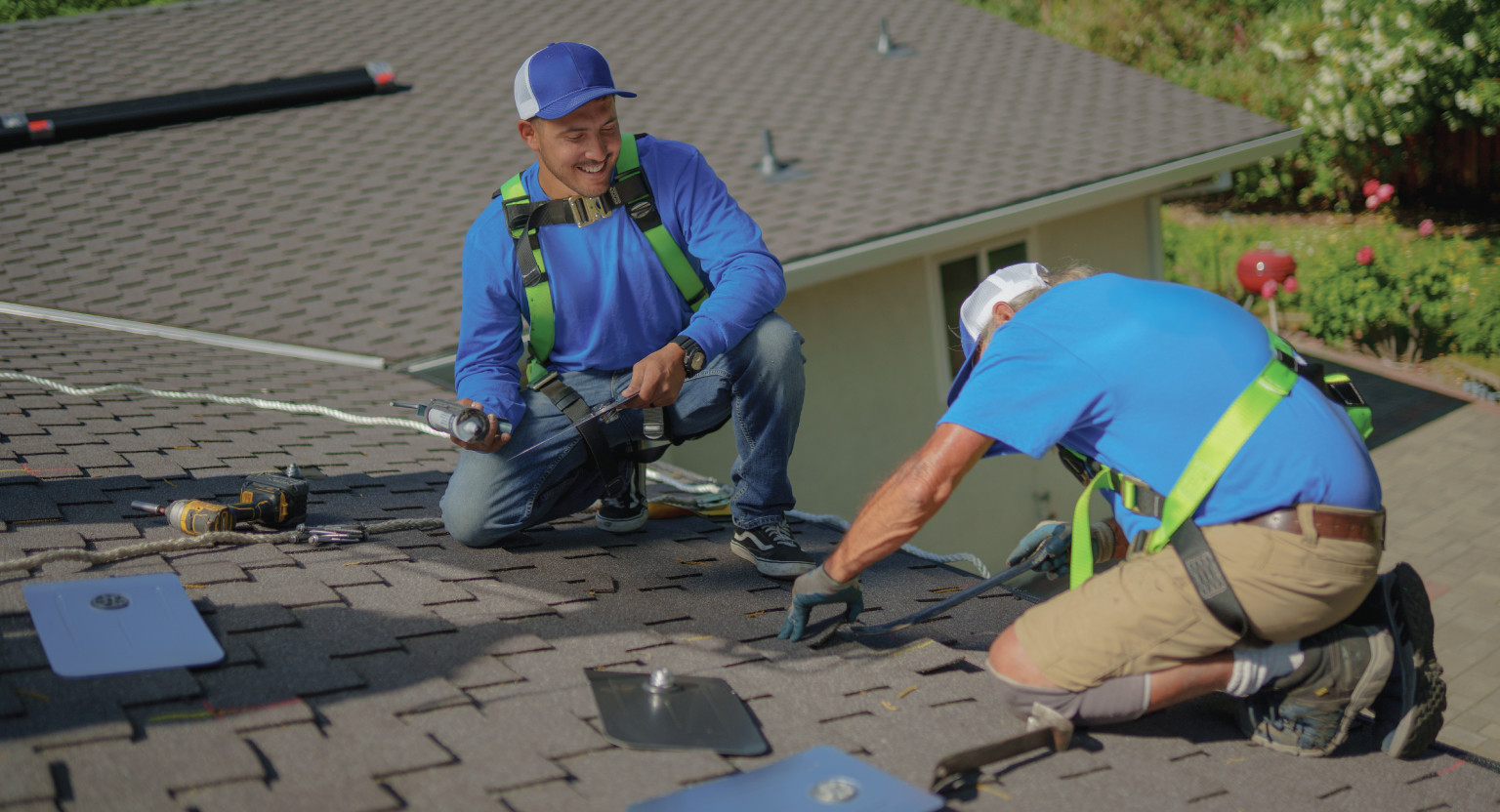
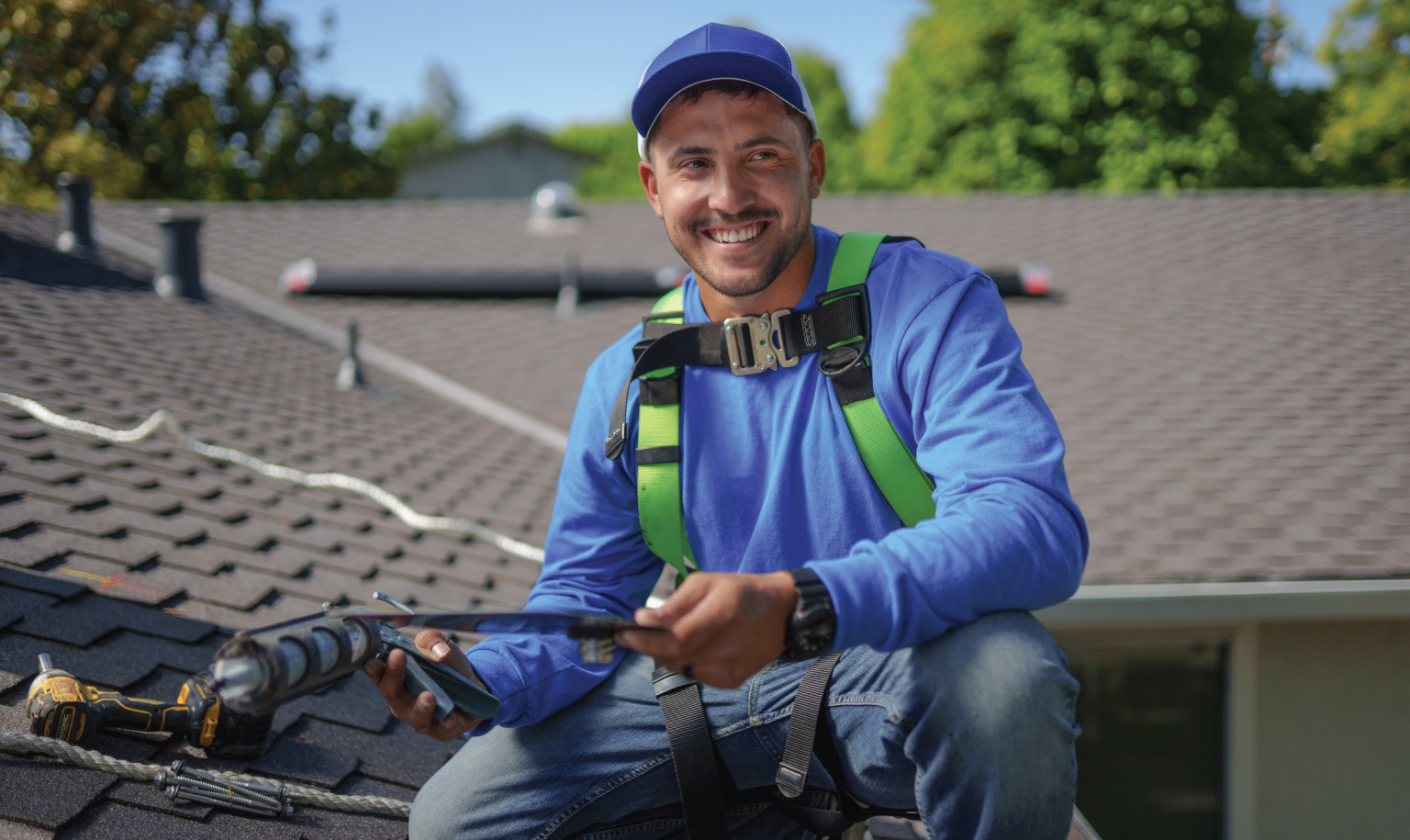
Fall protection systems reduce the risk of serious injuries by securing workers and improving stability during roofing, framing and other elevated work.
Falls remain the leading cause of death in construction, so protecting crews at height matters on every site, whether you’re putting a new roof on a build or tearing off and replacing an old one. When you’re evaluating gear for elevated work, footwear is a good place to start — look for roofing shoes with slip-resistant soles and jobsite-specific support to protect workers’ feet and knees and help prevent falls.
Beyond the right footwear, a few core systems do the heavy lifting on any job at height:
- Personal fall arrest systems: a full-body harness, lanyard and securely rated anchor point for anyone working at height
- Guardrails and toeboards: along roof edges, open floors and unfinished stairwells
- Safety nets: used where guardrails or harnesses are not practical
- Covers and warning lines: to flag skylights, floor openings and other holes in the deck
These systems matter whether you’re a builder framing a multistory home or a remodeler handling a steep tear-off or a second-story addition. Inspect them before every use, and replace any gear that is worn or has already taken a fall.
5. Heat Illness Prevention Tools and Resources
Heat illness prevention helps contractors monitor jobsite conditions, hydrate and rest crews, and prevent heat-related injuries as temperatures climb.
Heat is one of the most serious weather-related hazards on a jobsite, and construction crews are especially exposed, whether they’re framing a new build in open sun or remodeling an unconditioned space. In 2024, OSHA proposed the first-ever federal Heat Injury and Illness Prevention standard. As of 2026, the rule is proposed but not yet finalized, and OSHA is already enforcing heat hazards through its General Duty Clause and an active National Emphasis Program.
The proposed rule centers on two temperature triggers to plan around:
- Initial heat trigger (80°F): provide cool drinking water, paid rest breaks, shade and an acclimatization plan that eases new or returning workers into the heat
- High-heat trigger (90°F): add mandatory paid 15-minute rest breaks every two hours and watch workers for symptoms of heat illness
Put these tools and practices in place now:
- OSHA-NIOSH Heat Safety Tool app: a free app that calculates the heat index at your jobsite and recommends protective steps for the day’s risk level
- Jobsite temperature and humidity sensors (see Resource #2) to track conditions in real time
- Cooling PPE such as ventilated hard hats, cooling vests and moisture-wicking, UV-rated clothing
- A written acclimatization schedule that builds new hires up to full exposure over their first week
Building heat protocols into your daily routine keeps crews safe and productive, and it keeps you ahead of changing regulations.
6. Mental Health and Suicide Prevention Resources
Mental health resources help contractors support worker well-being and reduce the risk of suicide and substance misuse on their crews.
Jobsite safety isn’t only physical. Construction has the second-highest suicide rate and the highest fatal overdose rate of any U.S. industry, even though construction workers make up only about 7.5% of the workforce. Long hours, chronic pain, seasonal layoffs and a “tough it out” culture all add up, and many workers never reach out for help. More than 84% of construction workers who reported anxiety or depression did not see a mental health professional in the past year.
There is progress: Fatal overdoses among construction workers fell nearly 29% from 2023 to 2024. But the suicide rate is still more than four times the industry’s on-the-job fatality rate, which makes mental health one of the most important and most overlooked parts of any safety program.
Share these resources with your crew:
- 988 Suicide & Crisis Lifeline: free, confidential support available 24/7 by call or text to 988
- Construction Industry Alliance for Suicide Prevention (CIASP): free, industry-specific toolbox talks, posters and a needs-analysis tool
- Employee Assistance Programs (EAPs), where available, plus crisis resources posted alongside your standard safety signage
- Regular check-ins and toolbox talks that make it normal to talk about stress, workload and mental health on the jobsite
Treating mental health like any other jobsite hazard, by talking about it openly and removing the stigma, protects your crew as much as any hard hat.
Building a Safer, More Productive Jobsite
No single tool keeps a crew safe. Safety apps, jobsite sensors, smarter PPE, fall protection, heat planning and mental health support each address a different risk, and together they help builders and remodelers run safer, more productive jobsites. Start with the one or two areas where your crew is most exposed, then build from there. For more ideas, explore other jobsite technology you can put to work on your next project.
Construction Jobsite Safety FAQs:
What are the most important safety tools for contractors?
The most important safety tools for contractors in 2026 include mobile construction safety apps, jobsite sensors to monitor hazard detection, smart protective gear, fall protection systems, heat illness prevention tools and worker mental health resources.
How do jobsite sensors improve safety?
Construction jobsite sensors improve contractor safety by detecting hazards like gas leaks, extreme temperatures and high noise levels.
What is smart PPE in construction?
Smart personal protective equipment (PPE) in construction connects traditional gear like hard hats and safety glasses with integrated technologies, AI-powered sensors and connected platforms for team-wide alerts.
Does OSHA have a heat safety standard in 2026?
As of 2026, OSHA has proposed a federal Heat Injury and Illness Prevention standard, but it is not yet finalized. OSHA currently enforces heat hazards under its General Duty Clause, and contractors can use the free OSHA-NIOSH Heat Safety Tool app to monitor jobsite risk and plan water, rest and shade.
How can contractors support worker mental health?
Contractors can support worker mental health by sharing resources like the 988 Suicide & Crisis Lifeline and Construction Industry Alliance for Suicide Prevention (CIASP) toolbox talks, offering Employee Assistance Programs and treating mental health as part of their overall jobsite safety program.
Redefining Renewable Energy Distribution at RE+ 2026
Booth visitors can meet with renewable energy representatives, explore single-source solutions and win prizes ABC Supply Co, is putting the focus on what contractors need
ABC Supply Announces Northeast Region Leadership Transition
Tom Kuchan to retire following distinguished career; Steve Money named Northeast Region vice president ABC Supply has announced that Tom Kuchan, Northeast Region vice president, will
ABC Supply Announces CIO Leadership Transition
Tony Vaden to Retire as Chief Information Officer; Larry Sullivan Named Successor ABC Supply has announced that Chief Information Officer Tony Vaden will retire effective Jan.